3D Printing
Today’s newsletter explores the growth outlook of the 3D printing industry and some of the main players that offer direct and indirect exposure to the industry.
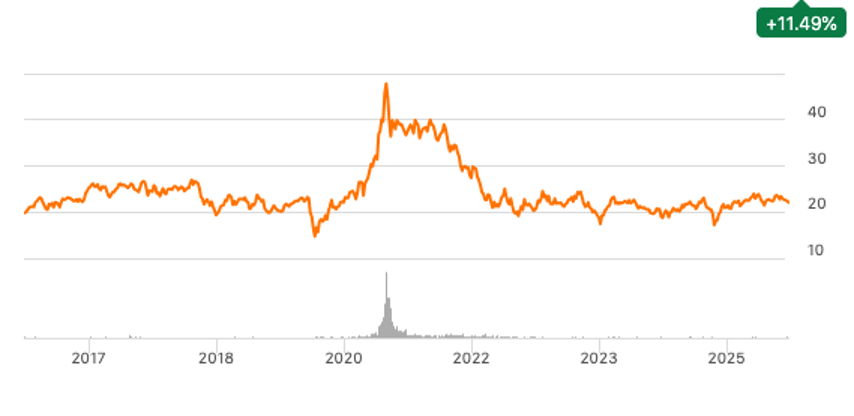
3D printing stocks experienced a sharp correction after peaking in 2021 and are currently trading near a decade low. Despite the recent slump in industry sentiment, many of these companies could be worth examining due to the disruption potential of the 3D printing industry.
Today’s newsletter explores the growth outlook of the 3D printing industry and some of the main players that offer direct and indirect exposure to the industry.
3D Printing Opportunities
The 3D printing industry has been a very disruptive, high-growth industry, which has begun to disrupt industries like manufacturing and healthcare.
After delivering explosive returns leading into 2021, many 3D printing stocks have begun to decline to more reasonable levels. While this industry has had many setbacks this decade, the growth outlook appears very favorable, and there have been many victors within the industry.
3D printing stocks may be worth exploring in 2026, especially if a broad-based US sell off creates more attractive entry points for key industry players. This newsletter provides an overview of the main 3D printing ETF in the market, as well as some of its constituents.
Growth of the 3D Printing Market
There have been many disruptions to manufacturing and supply chain management since 2020, and global industries, including the 3D printing industry, have been impacted. However, the 3D printing industry still has a lot of global relevance and has a strong growth outlook ahead of it in the coming decade. The industry still appears to be in the early innings of its growth potential, and could continue to disrupt multiple industries.
Fortune Business Insights projects that the global 3D printing industry will have a 21% CAGR through 2034. At the moment, North America accounts for around 42% of the global 3D printing industry, and areas like the Asia Pacific region are poised to have faster growth in the coming 5-10 years.
One of the main appeals of the 3D printing industry is that its technology can be applied to a wide variety of industries, including healthcare and various industrial companies.
3D printing plays a very versatile role in the healthcare industry, as it can be used to print drugs, medical devices, and biologics. Specific areas like the 3D printing drug market could nearly double by the end of this decade, according to Grandview Research. Stratasys, a leading 3D printing company, focuses on many types of unique applications in the healthcare industry, including medical device and medical materials manufacturing.
3D printing also has many applications in the manufacturing industry and has been heavily utilized in the public sector. Giants like the Air Force have been heavily relying on 3D printing technologies in their aerospace engineering process. MIT recently noted that defense companies could begin requiring advanced developments in AI, 3D printing, and other technologies to win contracts.
There are several private sector 3D printing companies that are publicly traded. 3D Systems, a large publicly traded company, has also been applying its 3D printing solution in multiple areas, including industries like consumer goods, semiconductors, and the automotive industry.
Recent Risks to Note
While the 3D printing industry has been experiencing steady growth, there are a number of risks to note, including weakening equity sentiment and poor performance of select companies in the industry.
Some dominant 3D printing companies, such as Desktop Metal, recently went bankrupt, while other smaller companies were either acquired or went out of business. Companies are rapidly innovating in this industry, so the threat of new entrants disrupting current players is very relevant.
One interesting trend to note is that many of the top-performing 3D printing stocks in 2025 weren’t traditional printing companies, but rather companies that implemented software or other solutions in the 3D printing industry.
The main risk to note is that sentiment for the majority of these stocks has been weak, even though there were many winners in the market in 2025.
Options to Consider
Betting on individual 3D printing companies can be very risky, and it may be a better idea to consider 3D printing-themed ETFs or a basket of 3D printing stocks if you want to gain exposure to this theme.
The Ark Invest 3D printing ETF is a good option to consider, or an excellent ETF to look at to examine some of the top industry players.
The 3D printing ETF has only returned around 11.5% since its inception, with equities peaking following their massive bull run in 2019 and 2020. While the market was likely due for a sanity check back then, 2026 appears like a more reasonable time to consider this industry.
This ETF provides exposure to traditional 3D printing hardware, used in industries like manufacturing, as well as software and IT companies that are serving the industry.
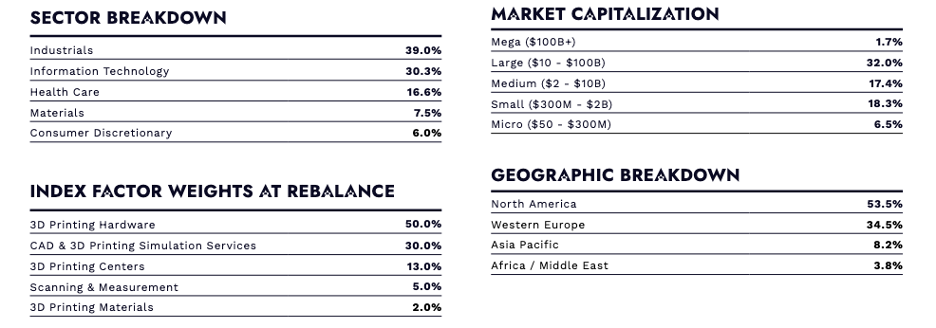
Many of the stocks in this ETF are not traditional additive manufacturing pureplays, but rather companies that produce software or materials used in the process. If you are looking for stronger pureplays on 3D printing, Stratasys and 3D Systems look like two of the most relevant options. Autodesk and Xometry, on the other hand, are excellent software players that also have exposure to 3D printing stocks.
Performance of Select Top Holdings in 2025
|
Company |
1 Year
Return |
|
Autodesk |
-3.12% |
|
Dentsply Sirona |
-17.21% |
|
Xometry |
67.56% |
|
Dassault
Systems SE |
-48.28% |
|
Proto Labs |
60.95% |
|
Stratasys Ltd. |
-16.38% |
|
3D Systems |
-31.45% |
Price performance as of March 5th, 2026
As seen below, there has been a massive divergence in the market performance of 3D printing stocks in the past year. Choosing this ETF over individual stock names can be a safer bet, and also provides more broad-based exposure to themes surrounding the 3D printing industry.
2026 looks like a more logical point to reconsider 3D printing stocks, many of which have not had very favorable performance in the past five years. While this is a high-risk and newer growth theme, there could be a lot of value unlocked in this industry in the coming years.