Asia Closed End Funds
In today’s edition, we cover some of the top Asian closed-end funds to check out, including country and regional ones.

International closed-end funds are intriguing options to consider in the current environment. Many of these funds have similar company holdings as peer exchange-traded funds, yet you can access these funds at a strong discount to NAV.
In today’s edition, we cover some of the top Asian closed-end funds to check out, including country and regional ones.
Asia Closed-End Funds Opportunities
Asia is a high-growth, reasonably valued region to consider if you want to diversify away from the S&P 500. Key Asian indices, like the MSCI AC Asia Index, rose by nearly 30% in 2025, well ahead of the S&P 500.
As markets potentially continue selling off in the short term, now could be an interesting time to take advantage of the discounts found in closed-end Asian funds. In many cases, some of these funds may trade at a 10% or higher discount to NAV.
Appeals of Asia’s Economy and Stock Market
Targeting Asian equities in 2026 could be a solid strategy, as the region is a key driver of global growth. Many of these economies will outpace developed markets in terms of economic growth in the upcoming years.
Asia is currently home to around 60% of the world’s population, with both India and China accounting for over a third of the global population. According to a recent report from the IMF, China, Indonesia, Japan, and India will be among the top six economies globally by 2040.
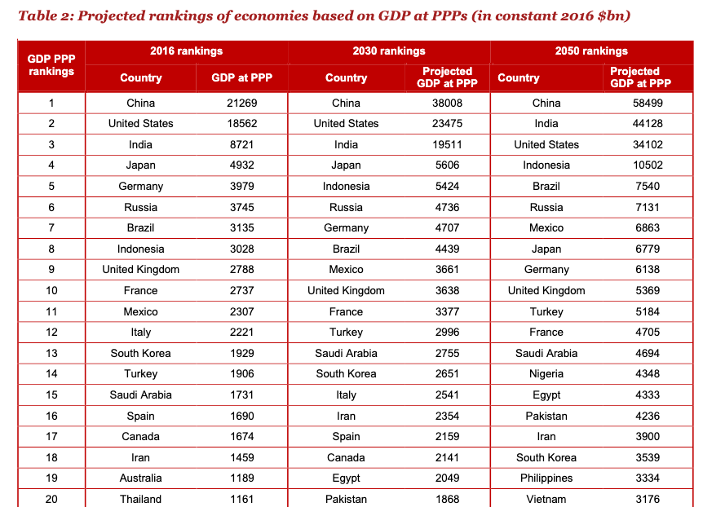
Other smaller Asian countries like the Philippines, Indonesia, and Vietnam will likely become larger global players in the coming decades. A PWC report shows that 8 out of the top 20 countries in terms of GDP (at PPP) may be Asian countries by 2050.
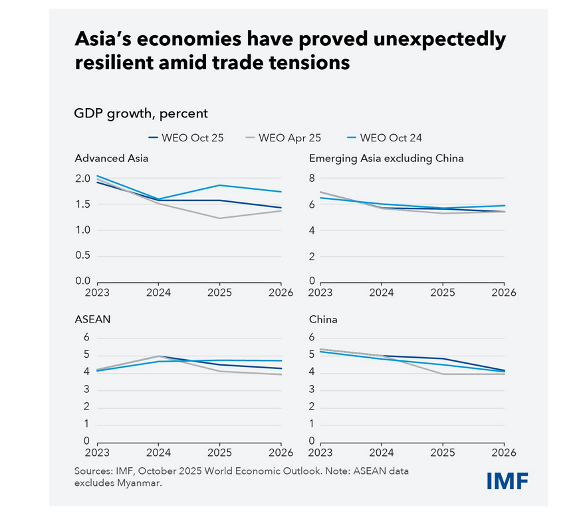
Asia’s economic growth has remained resilient in the past few years, with areas like emerging Asia and ASEAN leading the pack. Even as growth rates decline in China, it will still be able to surpass the global average growth rate.
Asian economies and capital markets were very resilient in 2025 amid trade war tensions, and many major markets outperformed the S&P 500.
Equity markets have a mixed outlook in 2026 and beyond. While the growth potential in these markets is very strong, recent geopolitical tensions have caused key Asian markets like South Korea to sell off massively recently. 2026 will likely be a much bumpier ride for the market.
JP Morgan is projecting moderate returns in Asian markets this year, according to its base case, while there is still a potential for a sell-off this year, especially since 2025 was already such a favorable year for many of these markets
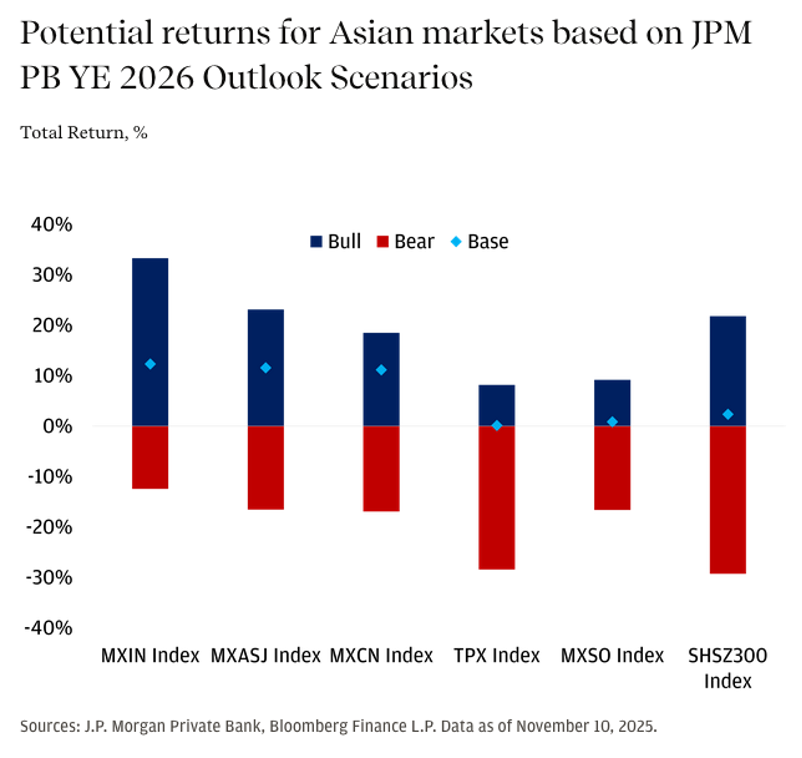
2026 will likely be very volatile, as we have seen in the past week, but the long-term outlook for Asia appears very favorable.
Asian Closed-End Funds Overview
Closed-end funds could be an interesting vehicle to pursue in 2026 if there are broad based sell offs in Asian stock markets this year. There are plenty of closed-end funds to check out. Select shopping may be the best response in this region in 2026.
|
Fund |
Recent Discount to NAV |
|
The Japan Smaller Capitalization Fund |
-14.21% |
|
Taiwan Fund |
–15.48% |
|
Aberdeen India Fund |
-4.97% |
|
Morgan Stanley China A Share |
-10.83% |
|
Korea Fund |
-10.19% |
|
Aberdeen Asia Pacific Income Fund |
-7.87% |
|
Voya Asia Pacific High Dividend Equity
Income Fund |
-8.15% |
Source: CEF Connect data as of March 6th, 2026
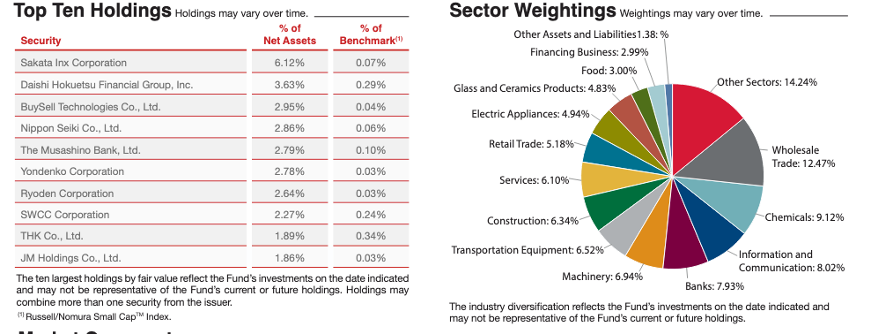
Japan is an intriguing option to consider, although the economy has been struggling with lower growth rates, inflation, and the new pressure of rising interest rates. The Japan Smaller Capitalization fund is a closed-end fund, trading at a circa 14% discount to NAV, that targets smaller companies in the Japanese market.
Markets like South Korea and Taiwan provide solid exposure to some of the AI-themed and semiconductor-oriented growth in the market, as they are leading electronics exporters in the region and the top 2 semiconductor producers globally. The Korea Fund and Taiwan Fund are two intriguing closed-end funds to consider. South Korea has sold off very strongly in recent trading sessions, so it may be ideal to wait for a better entry point for this market.
India and China are some of the world’s largest consumer markets and will also have some of the fastest growth rates in the upcoming years. At the moment, Indian equities have had a strong run, and the India Fund does not trade at a significant discount to NAV, so it may be better to consider China instead.
Another potentially safer play is to bet on regional closed-end funds, including funds that target the Asia Pacific region. The Aberdeen Asia Pacific Income Fund is a closed-end fund that primarily invests in sovereign debt, with over 80% exposure to the APAC region.
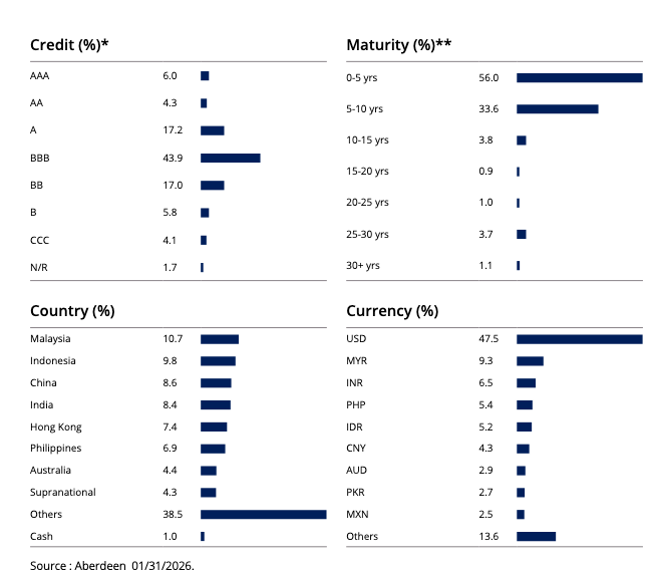
For those who want to focus on Asia Pacific equities, the Voya Asia Pacific High Dividend Income Fund is another option to consider.
At the moment, many of these closed-end funds do not trade at a strong historical discount, so it may be best to wait for a better entry point or to even consider exchange-traded funds for other countries.
Closed-End Funds vs. ETFs
There are many differences that you should consider before you decide whether to potentially consider closed-end funds over ETFs.
Liquidity: Many closed-end funds have much lower liquidity, which is a notable risk to consider amid the volatility in markets in 2026.
Strong Sell Offs/Discount to NAV: Closed-end funds may experience stronger sell-offs relative to ETFs, which makes timing a correct entry crucial. There may be room for a further widening of the discount to NAV this year if market conditions become bearish.
Management Fees: One of the main benefits of ETFs is their low fee structure. In many cases, closed-end funds may have higher management fees because of their active strategies or smaller AUMs.
Availability: If you are targeting smaller Asian markets, such as Thailand or Indonesia, your only option is ETFs or ADRs because of the lack of closed-end funds for these markets.
Asian equities have a lot of potential in the upcoming years, and both ETFs and closed-end funds are interesting vehicles to potentially consider. If the discount for more of these funds exceeds 10-15% in the coming months, this could be a new solid entry point for a long term approach to Asia. At the moment, only several of these closed-end funds trade at significant historical discounts, so there may be better entry points later in 2026. Global equity markets will likely be very volatile this year, so the risk of sell-offs in these markets is high at the moment.