Dividend Income Investing Strategies
This newsletter will showcase the history of dividend investing and provide several examples of funds that utilize solid dividend investing strategies.

In today’s edition, we explore several dividend strategies that can help you safeguard your portfolio from inflation and other economic risks.
Dividend investing has been a major historical driver of market returns in the past few decades, and there are plenty of stellar opportunities in both domestic and international markets.
This newsletter will showcase the history of dividend investing and provide several examples of funds that utilize solid dividend investing strategies.
Best Dividend Income Investing Strategies for 2026
Since the 1980s, there has been a massive decline in real yields around the world, which caused many investors to earn lower returns in key markets like the sovereign debt market. At the same time, many developed equity stock markets also offer comparatively lower dividend yields.
Consequently, dividend investing has emerged as a solid strategy to earn superior, long-term returns and protect one’s portfolio from inflation. Dividend investing is by no means a novel investing strategy, but it has come into focus in 2025.
For example, many exchange-traded funds that target companies based on dividend yields began to outperform the S&P 500 in 2025. Many investors are beginning to express concerns about the high valuation of the United States stock market.
Dividend investing offers a unique set of benefits, including higher yields, portfolio diversification, and the potential for higher returns during cyclical swings in the market.
As economic and geopolitical tensions heat up this year, adding exposure to high-yielding stocks can be an excellent way to protect your portfolio.
Why Should You Consider Dividend Investing?
Investing in dividend stocks is an excellent way to safeguard your portfolio and earn superior returns in the long run. Legendary investors like Warren Buffett utilize this strategy to perform well in the market, as it has an extensive history of driving market returns.
Although many high-yielding stocks may not be as flashy as other growth stocks, they can still deliver stellar returns in the long run. According to SP Global, dividend returns have accounted for more than one-third of the total returns of the S&P 500 since 1936.
The contribution of dividend income has varied in different decades, and is generally strong during riskier cycles when growth stocks underperform.
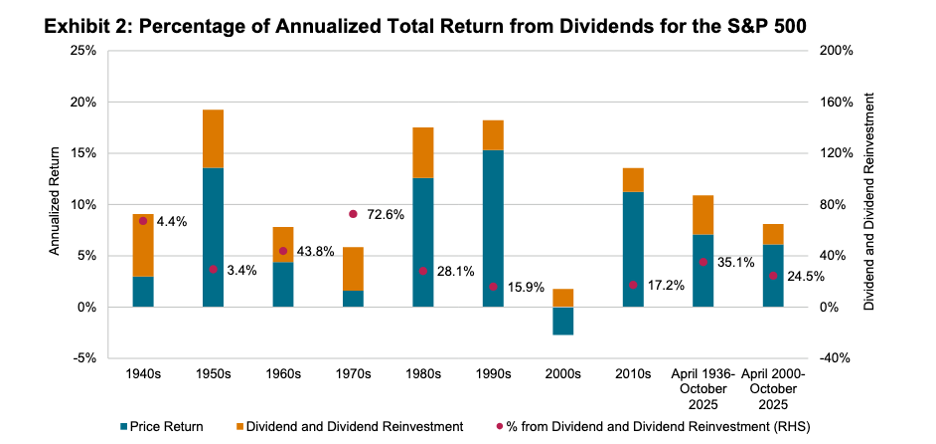
During riskier and inflationary cycles, such as the 1970s, dividend income was a major driver of the market’s return.
As yields remain low in many industries in developed markets, such as the tech industry, dividend investing in defensive industries has emerged as a solid portfolio diversification tool.
There are plenty of options available for investors, including those who want to only invest in larger companies in the United States, as well as those willing to venture into emerging and developed international markets.
United States Dividend Investing
Investors who are searching for high dividend yields in the United States market need to look outside of the broader S&P 500 Index. At the moment, this index only has a dividend yield of 1.2%, which is below its historical average and much lower than the inflation rate in the United States.
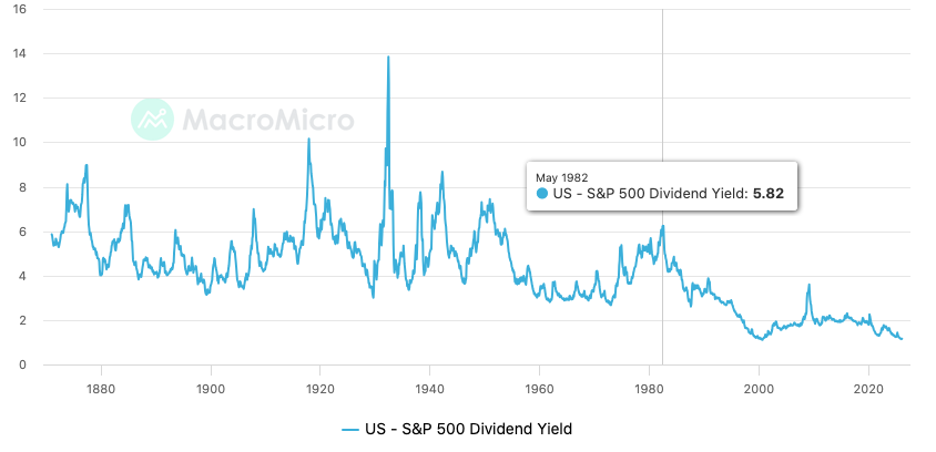
The dividend yield of the S&P 500 was nearly 6% in 1982!
This current setup in the United States is a bit abnormal, once you consider the historical dividend yield of the S&P 500 over the past few decades.
This is a quiet, but significant signal for investors to consider other avenues for obtaining higher yields in other markets. Growth stocks had their place in driving market returns in 2025, but may be due for a correction in 2026 as investors become more skeptical of the valuation and growth sustainability of leading tech and growth stocks.
One of the benefits of dividend investing is that many of the higher-yielding stocks are positioned in stable industries, which have a strong benchmark of performing well during poor economic cycles.
For example, utilities stocks currently yield around 3%, well above the S&P 500. SP Global recently released a report highlighting how utilities stocks were positioned to ride out a potential recession.
Another benefit of dividend investing in the United States is that it is a low-fee approach. Many brokerages offer free trading on equities, and Vanguard manages several dividend funds with an annual fee below 0.1%.
Exploring International Dividend Options
Bolder investors who are willing to invest outside of U.S. markets can sometimes earn higher dividend yields. While most large-cap US equity positions yield less than 2%, international options often have much higher yields.
For example, the MSCI EAFE High Dividend Yield Index, which tracks stocks outside of the United States and Canada, currently has a dividend yield of 4.2%.
Some popular ETF options to consider include the Vanguard International High Dividend Index ETF (VYMI), Schwab International Dividend Equity ETF (SCHY), and the Vanguard Total International Stock ETF (VTIAX). These options invest in established large caps in developed markets and have a yield above that of the S&P 500.
Many investors have also been increasing exposure to emerging stock markets, due to the stronger growth and diversification benefits since these markets are not correlated to the United States equity markets. Moreover, many stocks in these markets offer above average dividend yields.
For example, the iShares MSCI Emerging Markets Dividend Yield ETF (DVYE) currently offers a 5.8% dividend yield.
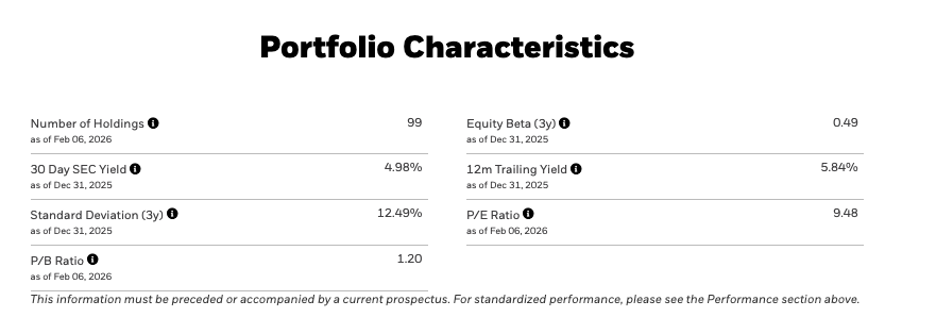
Many investors have been waking up to the potential offered in emerging markets, as these markets returned 33% in 2025.
As valuations of the United States remain at a record high, diversifying one’s portfolio in international markets is a solid strategy to access undervalued stocks with higher dividend yields.
Dividend Investing in 2026
Dividend investing has been a solid investment strategy for multiple decades, and has proven especially useful during riskier economic cycles. As economic and political risks accelerate in 2026, investors can consider some of these domestic and international dividend strategies.
Stay tuned to future newsletters, in which we will explore other dividend income strategies and other ways to safeguard your portfolio from inflation.