Robotic Newsletter
In today’s edition, we explore the long-term growth outlook of the robotics industry and examine which industries may stand to benefit from the growth of the robotics industry.

The robotics industry has been gaining traction in the equity markets in recent years, and it still appears that this industry is in the early innings of disrupting a wide variety of dominant sectors in the stock market.
In today’s edition, we explore the long-term growth outlook of the robotics industry and examine which industries may stand to benefit from the growth of the robotics industry.
Opportunities in the Robotics Market
While the robotics industry initially began gaining traction in the 1960s, it has recently become a much more salient theme in the market as investors begin to focus on trends like automation and AI.
There are plenty of ways to gain exposure to this exciting theme, including by investing directly in robotics companies and companies in various industries like manufacturing and healthcare that have begun implementing robotics.
Growth Outlook
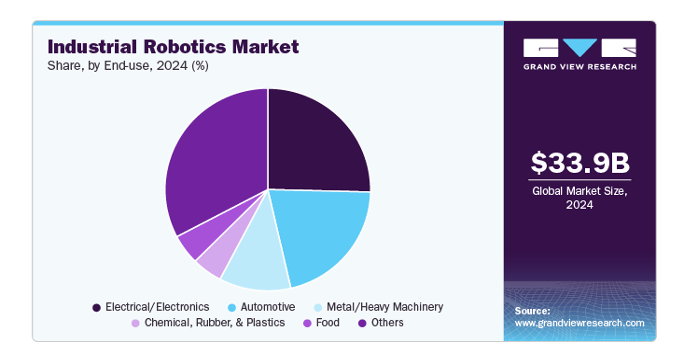
The global robotics market still has ample growth potential in the coming years, as robotics can be applied to a variety of industries, including electronics, automotives, heavy machinery, F&B, and chemical companies.
Global funding for robotics recently surpassed $10 billion in 2025, the highest level since 2021. There has been broad-based interest in the global industry from many important names, including Bezos funded companies, the Pentagon, and Johnson & Johnson.
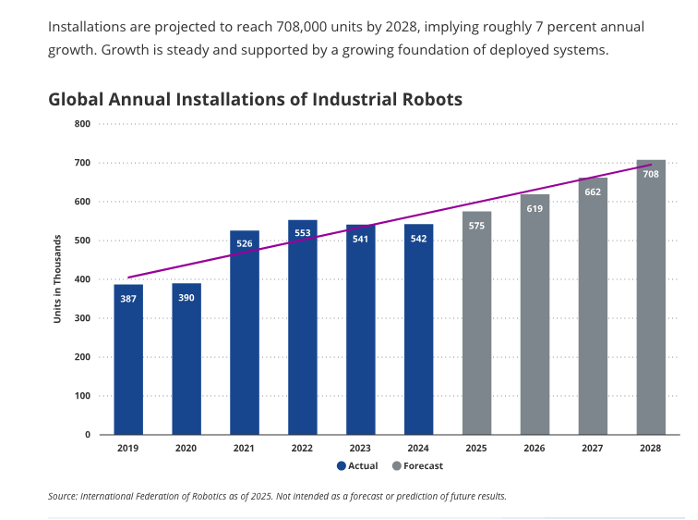
The global stock of robotics has more than doubled since 2018, and new installations may continue to grow massively through 2028, according to VanEck.
Grandview Research projects that this market will have a 9.9% CAGR through 2030, driven by multiple sources of growth.
Robotics poses an interesting solution to labor issues that many companies face, as it can help cut costs even if human parts of the process are not eliminated. Robotics can also serve as a support system for human labor, helping companies provide support for overworked employees and to attract younger, tech-driven employees. This automation may also help to boost the margins of companies that implement robotics.
Robotics has also emerged as a solution to the demographic issue that many developed countries are beginning to face. Many developed economies, like Japan, are beginning to face a demographic crisis due to the aging population and may have to rely on robotics to meet the demands of the labor market.
This is one of the reasons why over 70% of the newly installed robotics have been in Asia, while the remaining amount has primarily been in Europe and the United States. Therefore, there could be plenty of sources of growth driven by consistent demand in Asia, as well as increased automation trends in the United States, Europe, and other emerging markets.
As robotics potentially continues to disrupt more industries, it has the opportunity to gain more credibility and continue transforming businesses in a variety of industries and new countries, which have been taking a wait and see approach.
Trends to Note
Robotics is poised to have a massive disruptive impact on a variety of industries in the coming years, and there have already been many strong disruption narratives taking place.
One of the most interesting trends to note is how robotics is being introduced into healthcare, including initiatives like robotic surgery. This trend is already beginning to gain momentum, as over 2 million surgeries in the United States were performed with the use of robotics in 2024.
Many robotics companies have been targeting manufacturing companies that want to introduce automation, including machine vision services. Cognex Corporation has been a pioneer in this space, aiding companies with factory and warehouse manufacturing. Cognex projects that machine vision will grow by 37% in the next two years, as companies potentially embrace increased automation.
The automotive industry has also been increasingly embracing robotics in recent years. At the moment, Japan, Germany, South Korea, and China produce 70% of the robotics equipment used in automotive manufacturing.
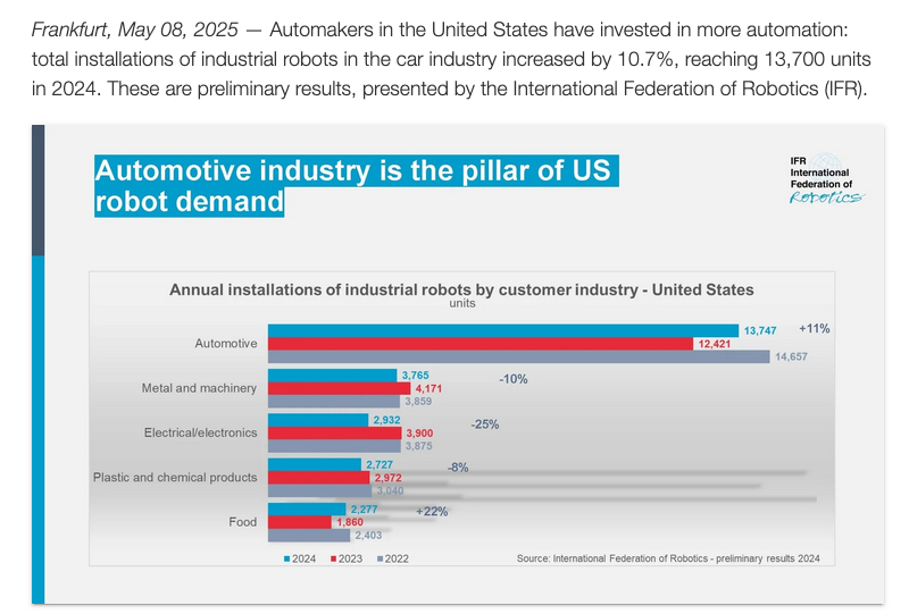
These are just a few of the themes that have been impacted. Apart from robotics pureplays, there are plenty of opportunities for traditional F&B companies and companies in other industries to implement robotics to cut their labor costs and boost efficiency.
Themes to Check Out
While all eyes have been on initiatives from leading giants like Tesla and Nvidia, there are plenty of other large caps that potentially stand to benefit from the growth of robotics in the coming years.
One of the best places to start is by checking out other ETFs, such as the VanEck Robotics ETF. This ETF invests in leading names like Rockwell Automation, which focuses on industrial automation, and Autodesk, a software company that focuses on robotics applications in manufacturing and construction.
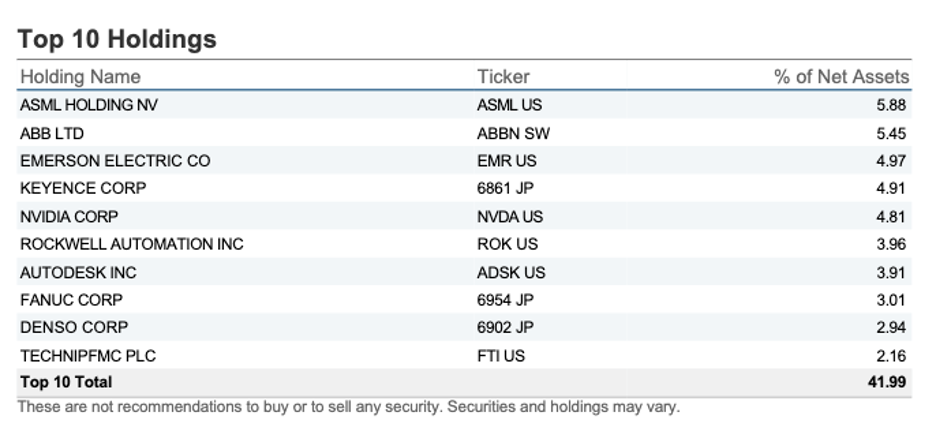
The Global X Robotics & Artificial Intelligence ETF is another vehicle to consider, which targets key themes like capital goods, semiconductors, healthcare, energy, and software.
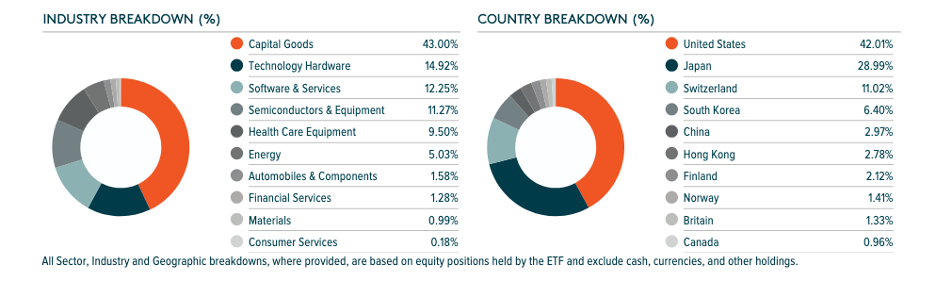
This ETF also provides solid exposure to robotics trends in key Asian markets like Japan, South Korea, China, and Hong Kong.
The diversified approach of both of these ETFs can help one gain strong exposure to various industries that may continue to be heavily impacted by the growth of robotics.